Design philosophy
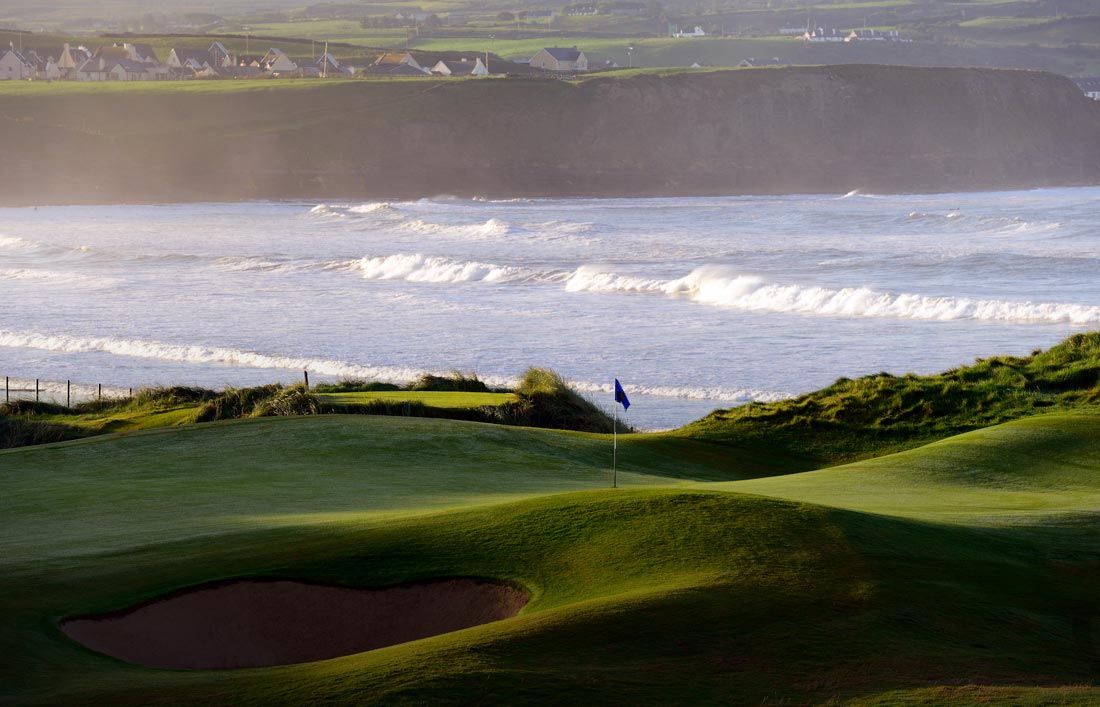
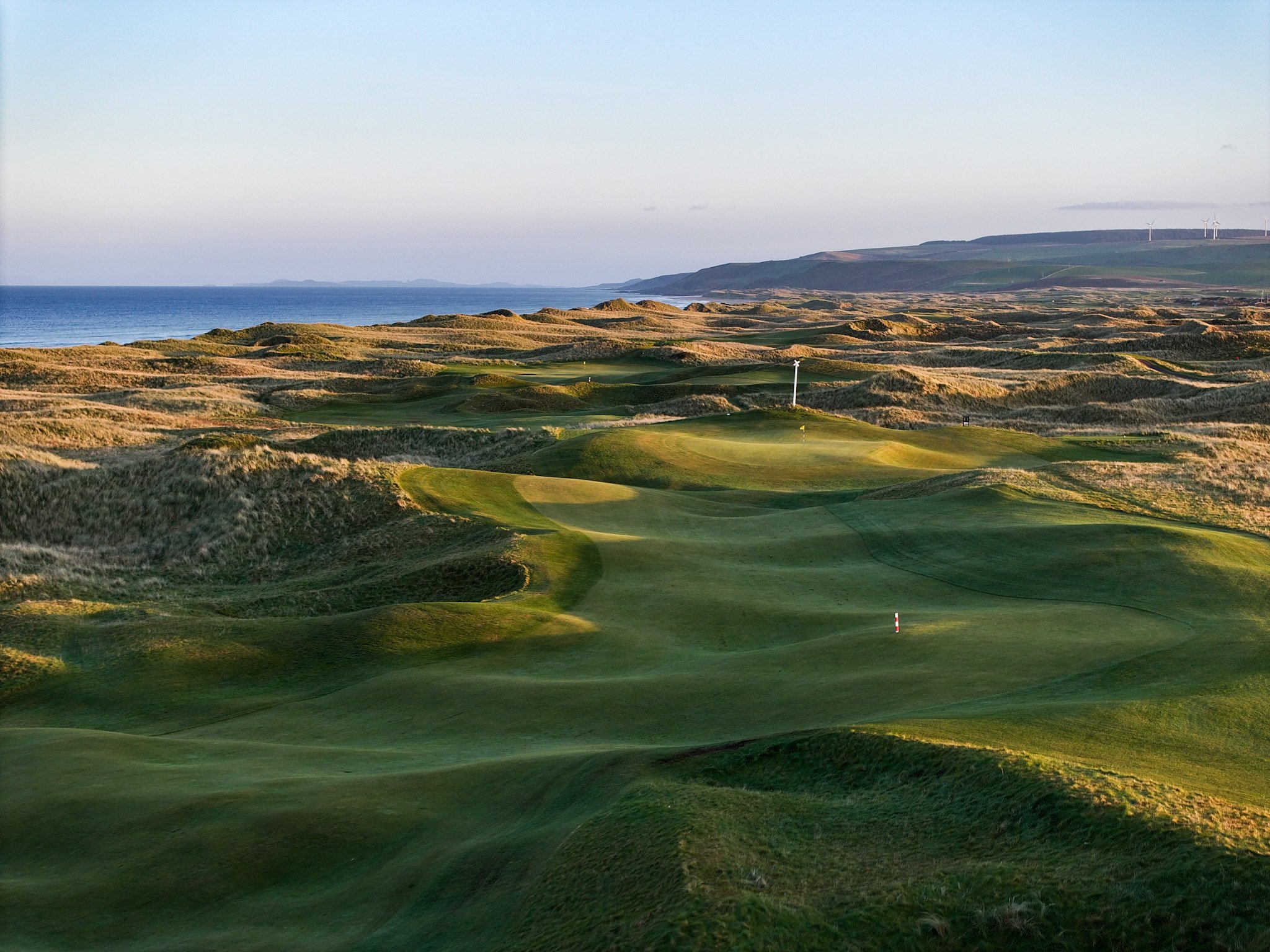
Making use of natural landforms, generous greens, modern drainage and upkeep; holes integrated with the terrain rather than constructed against it.
Thomas Mitchell Morris, universally known as Old Tom Morris, is one of the central figures in golf history. Born in St Andrews on 16 June 1821, the son of a weaver, he grew up beside the Old Course. At fourteen he was apprenticed to Allan Robertson, the leading player and most celebrated ball maker of the period. Morris learned to manufacture featheries, maintain golf ground and understand the behaviour of wind, sand and turf. He also became Robertson’s partner in famous challenge matches. Their association ended when Morris used the new gutta-percha ball, an innovation whose lower cost threatened his master’s traditional business. In 1851 Morris left St Andrews for Prestwick, where he became keeper of the green, club professional and steward of the new course. He laid out its original twelve holes, maintained the links and helped establish The Open Championship, first played at Prestwick in 1860. A formidable competitor, he won the championship in 1861, 1862, 1864 and 1867 and remains its oldest winner. His playing life was inseparable from that of his son Young Tom Morris, the brilliant prodigy whose early death cast a lasting shadow over his father’s later years. Morris returned to St Andrews in 1864 as Keeper of the Green and held the post for almost four decades. His methods helped define modern maintenance: he advanced the sanding of greens, improved drainage, enlarged putting surfaces, introduced separate teeing grounds and enabled a more orderly flow of play. As a course maker he worked on dozens of sites across Scotland, England and Ireland. Prestwick, Muirfield, Machrihanish, Royal North Devon, Lahinch, Rosapenna, Balcomie and the Jubilee Course at St Andrews rank among his most important creations or remodels. His philosophy was not to impose an abstract geometry upon the land. Morris followed existing contours, made hazards from natural features and sought holes that appeared to have always belonged to their setting. Historians credit him with more than seventy designs or interventions, although authorship was often shared in that pioneering era. He died in St Andrews on 24 May 1908 after falling down a staircase at the New Golf Club clubhouse. His legacy is vast: as player, greenkeeper, professional, manufacturer and architect, Old Tom helped shape almost every dimension of modern golf.
Making use of natural landforms, generous greens, modern drainage and upkeep; holes integrated with the terrain rather than constructed against it.
Prestwick; Old Course at St Andrews (remodeling and maintenance); Muirfield; Machrihanish; Royal North Devon; Lahinch; Rosapenna; Balcomie; Jubilee Course at St Andrews
Undated · 2
19 of 19 courses located — click a point to open its page.






12 of 19 courses shown