Design philosophy
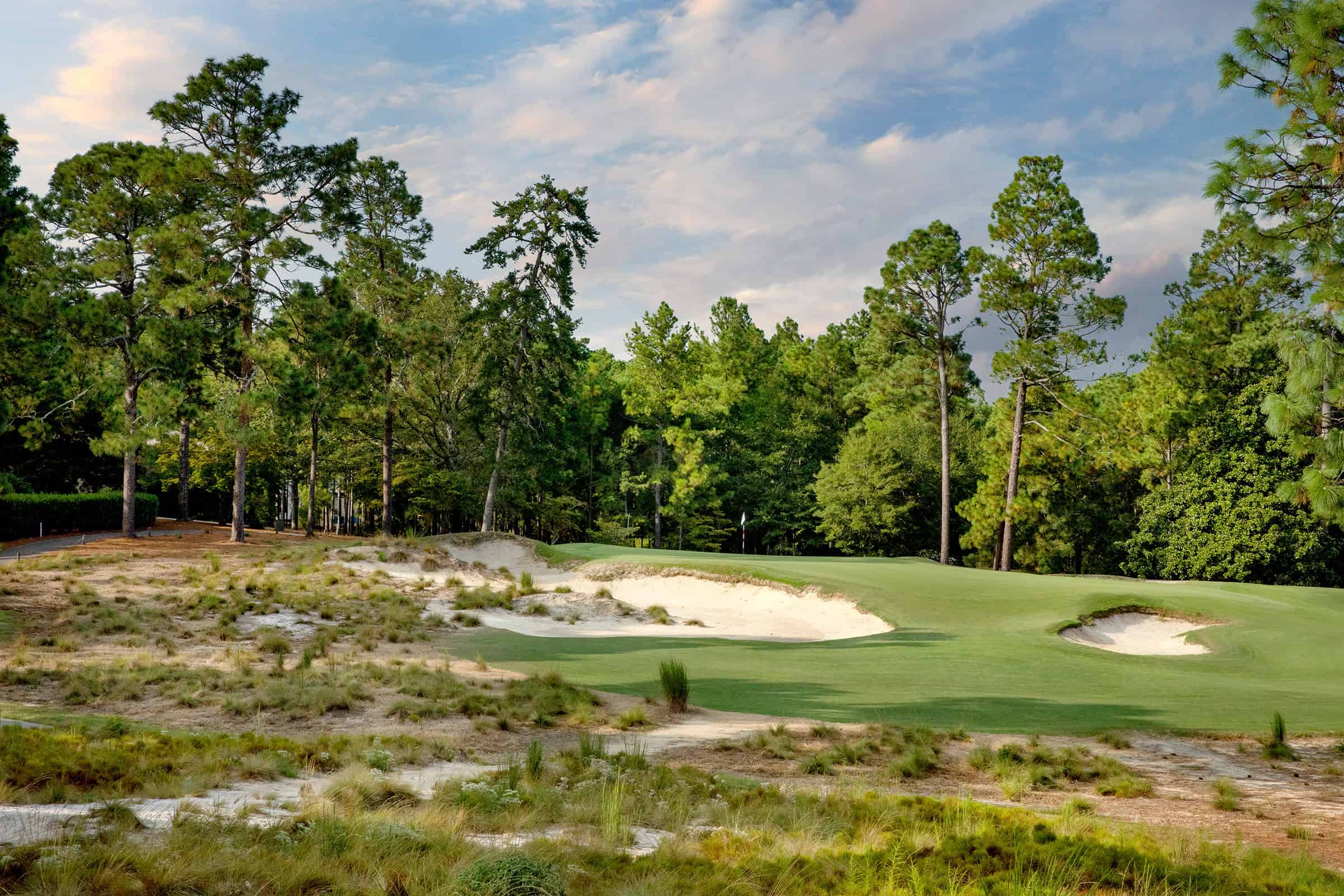
Upturned greens and fall-away slopes; economical earthmoving; generous fairways off the tee, enhanced precision on approach; adaptation of Scottish principles to American landscapes.
Donald James Ross was born in Dornoch in the Scottish Highlands on 23 November 1872, the son of a stonemason. The dunes, North Sea winds and naturally formed greens of Royal Dornoch provided his first education. After an artisan’s training, Ross became a greenkeeper and assistant professional at the club. He then spent time at St Andrews with Old Tom Morris, absorbing methods of maintenance, respect for existing contours and the belief that a good hole should emerge from the land. Back at Dornoch he developed an intimate understanding of raised green plateaus, open entrances and shedding slopes, features that would recur throughout his American work. Ross emigrated to the United States in 1899. He began at Oakley Country Club near Boston and then met James Walker Tufts, the founder of Pinehurst. Tufts hired him as a professional in 1900 and entrusted him with the resort’s expanding golf courses. Pinehurst became his home, laboratory and the centre of an architectural practice without precedent. Ross refined Pinehurst No. 2 over several decades, adjusting sandy fairways, playing angles and, above all, crowned greens surrounded by closely mown fall-offs. These “turtleback greens,” frequently imitated but often misunderstood, are not simply severe. They make the position of the previous shot decisive and create many recovery choices along the ground. Ross designed or remodelled roughly four hundred courses across North America. Seminole, Oakland Hills South, Inverness, Scioto, Oak Hill East, Wannamoisett, Essex County, Plainfield, Aronimink, French Lick and Pinehurst No. 2 are among his major works. Such enormous output depended on an organised office: Ross inspected sites, established routings and essential principles, then worked with associates and construction crews. Yet his career should not be reduced to plans dispatched from a desk. On important projects he returned repeatedly, revised forms and allowed playing surfaces to mature before considering them complete. His style combines economical earthmoving, use of natural drainage, visually integrated bunkering and greens that demand control of trajectory. The best Ross courses provide room from the tee but become intellectually narrower as the player approaches the target. They accommodate the average golfer while requiring the expert to find a precise position. In 1947 Ross became the first president of the American Society of Golf Course Architects. He died at Pinehurst on 26 April 1948. His influence rests not only on the number of courses he produced, but on the way he translated the lessons of Scottish links golf into a remarkable range of American soils, climates and landscapes.
Upturned greens and fall-away slopes; economical earthmoving; generous fairways off the tee, enhanced precision on approach; adaptation of Scottish principles to American landscapes.
Pinehurst No. 2; Seminole; Oakland Hills South; Inverness; Oak Hill East; Scioto; Wannamoisett; Essex County; Plainfield; Aronimink; French Lick Donald Ross
6 of 6 courses located — click a point to open its page.