Design philosophy
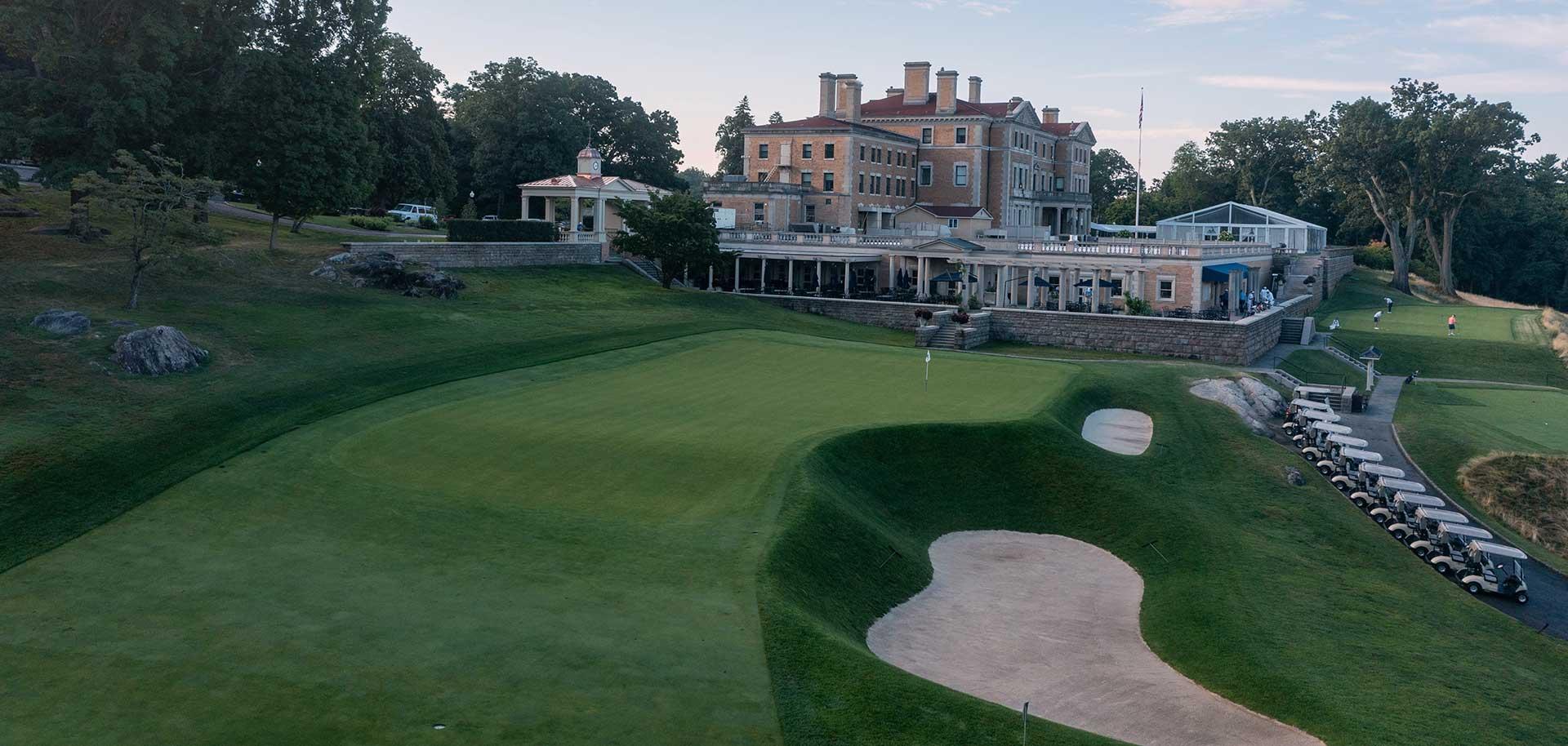
Dramatic but varied architecture; powerful bunkers, greens with complex internal contours, sequences of tension and relief; strong presence on-site.
Albert Warren Tillinghast, usually identified by his initials A. W. and nicknamed “Tillie,” was born in Philadelphia in May 1876 into a prosperous family associated with the rubber industry. His youth was less conventional than that of many designers from privileged backgrounds. He passed through a restless period, pursued literature and lived at times without much discipline before golf gave him lasting direction. A journey to St Andrews in 1896 proved decisive. There he met Old Tom Morris and encountered a culture in which courses were simultaneously landscapes, playing fields and works of art accumulated over generations. Back in the United States he became a devoted golfer, journalist and editor. He wrote hundreds of articles, managed publications and developed a highly individual voice on the game. His first major design assignment came in the early twentieth century at Shawnee-on-Delaware. Tillinghast had no formal training as an engineer or landscape architect. He learned through observation, drawing, writing and, above all, intense involvement on construction sites. Working with local crews, he adjusted shapes directly in the ground and refused to confine himself to a single visual signature. His courses could be subtle and natural or dramatic and heavily modelled, according to the character of the site and the club’s resources. During the 1910s and 1920s he became one of America’s most sought-after architects. Winged Foot West and East, Baltusrol Lower and Upper, Quaker Ridge, Somerset Hills, San Francisco Golf Club, Philadelphia Cricket Club’s Wissahickon, Sleepy Hollow and Bethpage Black form the core of his work. He also served as an adviser at Pine Valley. Tillinghast excelled at organising long championship courses, but the complexity of his greens and smaller details is equally important. Powerful bunkers frame lines, putting surfaces contain intricate internal slopes and routings alternate tension with release. He sought drama without making every difficulty feel the same. The Depression destroyed much of his fortune and sharply reduced commissions. In 1935 the PGA of America appointed him consulting architect to visit clubs and recommend economical improvements. This late phase revealed a pragmatic designer willing to remove unnecessary hazards, speed play and reduce maintenance rather than automatically add difficulty. Tillinghast died in Toledo on 19 May 1942 while travelling. Roughly two hundred and fifty designs or interventions are associated with him, and a remarkable number of major championships have been played on his courses. His legacy is one of exceptional range: romantic writer, practical field architect and designer capable of giving each club a distinct identity, often theatrical in appearance but consistently founded on the choice of shot.
Dramatic but varied architecture; powerful bunkers, greens with complex internal contours, sequences of tension and relief; strong presence on-site.
Winged Foot West; Winged Foot East; Baltusrol Lower; Baltusrol Upper; Bethpage Black; Quaker Ridge; Somerset Hills; San Francisco Golf Club; Philadelphia Cricket Club Wissahickon; Sleepy Hollow
6 of 7 courses located — click a point to open its page.