Design philosophy
Largeur stratégique, routes alternatives, barrancas et pentes naturelles, bunkers monumentaux mais cohérents; recherche de beauté, d’individualité et de trous immédiatement mémorables.
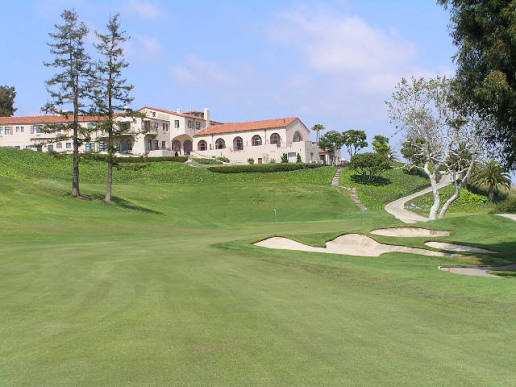
George Clifford Thomas Jr. was born in Philadelphia on 3 October 1873. He graduated from the University of Pennsylvania in 1894 and joined the family investment bank, Drexel & Company. He also served as an officer, producing the enduring nickname “Captain.” His interests extended far beyond finance and golf: Thomas became an internationally respected rose breeder, an author and an attentive student of nature. That horticultural sensitivity directly informed his architecture. On his family’s Pennsylvania estate he shaped a course that later became Whitemarsh Valley, placing him within the Philadelphia School alongside Crump, Wilson, Flynn and Tillinghast. In 1919 he moved to California for health reasons and encountered radically different landscapes: dry canyons, hills, barrancas, oaks and distant views. With builder and architect William P. Bell, he then created one of the Golden Age’s most concentrated and influential portfolios. Los Angeles Country Club North, Bel-Air and Riviera form the core of his legacy. At Riviera, Thomas studied numerous routings before fixing a sequence that crosses and recrosses canyon land intelligently without appearing forced. His fairways are often broad, but angles, slopes and hazards make certain positions far more valuable than others. Barrancas are not merely drainage channels; they become strategic lines, visual separations and engines of variety. Thomas wanted every hole to possess an individual identity. Bunkers can be enormous, yet they follow landform and strengthen choices. Greens generally respond to the approach terrain, so the ideal side of a fairway changes with hole location and wind. The architecture therefore combines visual power with tactical freedom. He set out his ideas in Golf Architecture in America, an important work advocating beauty, strategy, individuality and thoughtful construction. Thomas died at Beverly Hills on 23 February 1932, aged fifty-eight. His portfolio is comparatively small, but its concentration of masterpieces is exceptional. He demonstrated that California could produce an autonomous architectural school founded on canyons, width and an artist’s understanding of landscape.
Largeur stratégique, routes alternatives, barrancas et pentes naturelles, bunkers monumentaux mais cohérents; recherche de beauté, d’individualité et de trous immédiatement mémorables.
2 of 2 courses located — click a point to open its page.