Design philosophy
Empirical reading of natural linksland; enhancement of greens and playing surfaces; transition from artisanal upkeep to organized design.
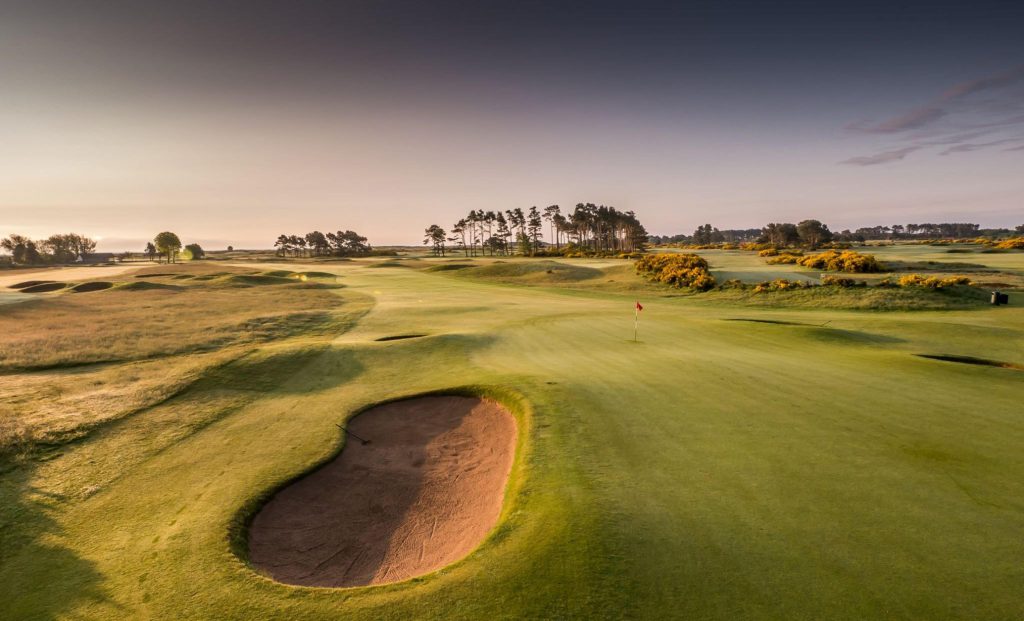
Allan Robertson holds a foundational place in golf history. He is widely regarded as the game’s first great professional and as one of the earliest figures to combine the roles of player, ball maker, greenkeeper and course shaper. Born in St Andrews on 11 September 1815, he grew up in a family that manufactured featheries, the leather balls tightly packed with feathers whose production demanded exceptional craft. Robertson inherited the family business and developed such a reputation that his name became a mark of quality throughout British golf. His playing ability was equally important. Before organised championships existed, Robertson was considered almost unbeatable in high-stakes matches. He was also the first golfer known to have completed the Old Course at St Andrews in fewer than eighty strokes. The young Tom Morris entered his workshop as an apprentice and later became his employee and celebrated playing partner. Together they contested major matches and worked on golf grounds. Their relationship ended when Morris embraced the new gutta-percha ball. Cheaper to produce, the guttie threatened Robertson’s profitable featherie trade and represented the technological transformation that was reshaping golf in the mid-nineteenth century. Robertson was not an architect in the later professional sense, yet his influence on the physical development of courses was decisive. At Carnoustie he worked with Morris on the enlargement of the early layout. At St Andrews he improved playing surfaces, enlarged greens and helped guide the natural links toward a more deliberately maintained and organised course. His method did not begin with formal drawings. It relied on close observation of soil, wind, dunes and the routes naturally chosen by golfers, decades before detailed plans, earthmoving machinery and specialist contractors became standard. Robertson died in St Andrews on 1 September 1859 after an illness generally described as jaundice. His death left Scottish golf without an undisputed champion. Prestwick Golf Club’s search for a successor contributed directly to the staging in 1860 of the first championship that would become The Open. Robertson’s legacy therefore extends far beyond the small number of courses formally associated with him. He personifies golf’s transition from craft tradition to professional sport and forms the earliest link in an architectural lineage that runs through Old Tom Morris to the great designers of the Golden Age.
Empirical reading of natural linksland; enhancement of greens and playing surfaces; transition from artisanal upkeep to organized design.
St Andrews Old Course (improvements); Carnoustie (enlargement of the original layout, with Tom Morris)
—
Undated · 1
1 of 1 courses located — click a point to open its page.